Rodent exclusion differs fundamentally from recurring baiting programs. Bait boxes placed along exterior perimeters depress outdoor rodent populations temporarily, whereas structural exclusion physically blocks roof…
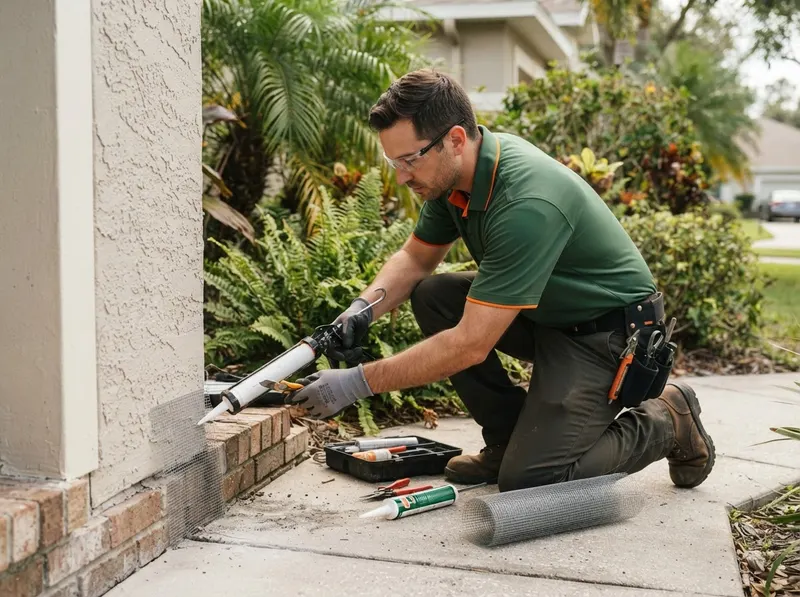
Rodent exclusion differs fundamentally from recurring baiting programs. Bait boxes placed along exterior perimeters depress outdoor rodent populations temporarily, whereas structural exclusion physically blocks roof rats from exploiting the 1/2-inch gaps typical along barrel-tile rooflines, fascia transitions, and AC chase runs. In southwest Florida, roof rats enter along elevated canopy lines, crossing over oak limbs directly into attic spaces. The technical trade-off centers on upfront capital allocation: structural hardware exclusion requires mechanical installation labor and metal mesh fabrication, but it eliminates interior rodent mortality, toxic decay odors inside drywalled chases, and secondary poisoning hazards to local predatory raptors. A chemical-only approach costs less initially per visit, yet leaves the architectural entry points unprotected, resulting in re-infestation every breeding cycle.
Properties bordering natural riverfront corridors and wetlands, such as mature properties in McGregor Meadows, Dean Park Historic District, and Edgewood along the Caloosahatchee River, experience consistent pressure from roof rats nesting in mature royal palms and citrus trees. Farther inland near Six Mile Cypress Slough Preserve, communities like Pelican Preserve, Paseo, Heritage Palms, Botanica Lakes, and Whiskey Creek face intrusions tied to seasonal water fluctuations and tile roof construction. Construction profiles throughout Lee County routinely feature stucco-over-frame construction where expanding foam alone fails; rodents chew through standard polyurethane within hours. Permanent abatement requires mechanical fastening of 24-gauge galvanized hardware cloth, copper mesh inside weep screeds, metal flashing around plumbing vents, and elastomeric sealants that withstand coastal humidity.
Execution follows an objective, sequential protocol across four distinct phases: 1. Complete attic and perimeter diagnostic to map grease rub marks, droppings, and thermal air currents escaping foundation corners. 2. Mechanical sealing of all exterior voids exceeding 1/4 inch using non-corrosive metals, metal chimney caps, and reinforced soffit screens. 3. Placement of snap traps along measured interior travel paths in attic trusses, checked across scheduled intervals until zero activity is recorded. 4. Decontamination of nesting sites, including vacuuming droppings with HEPA filtration and applying botanical virucidal mists over affected blown-in cellulose or fiberglass insulation.
Every job gets a firm, written price after a free on-site visit.
Tell us about your rodent exclusion and abatement job in Fort Myers and we'll send a clear, written quote, usually the same day.
 Caloosa Pine Pest Control